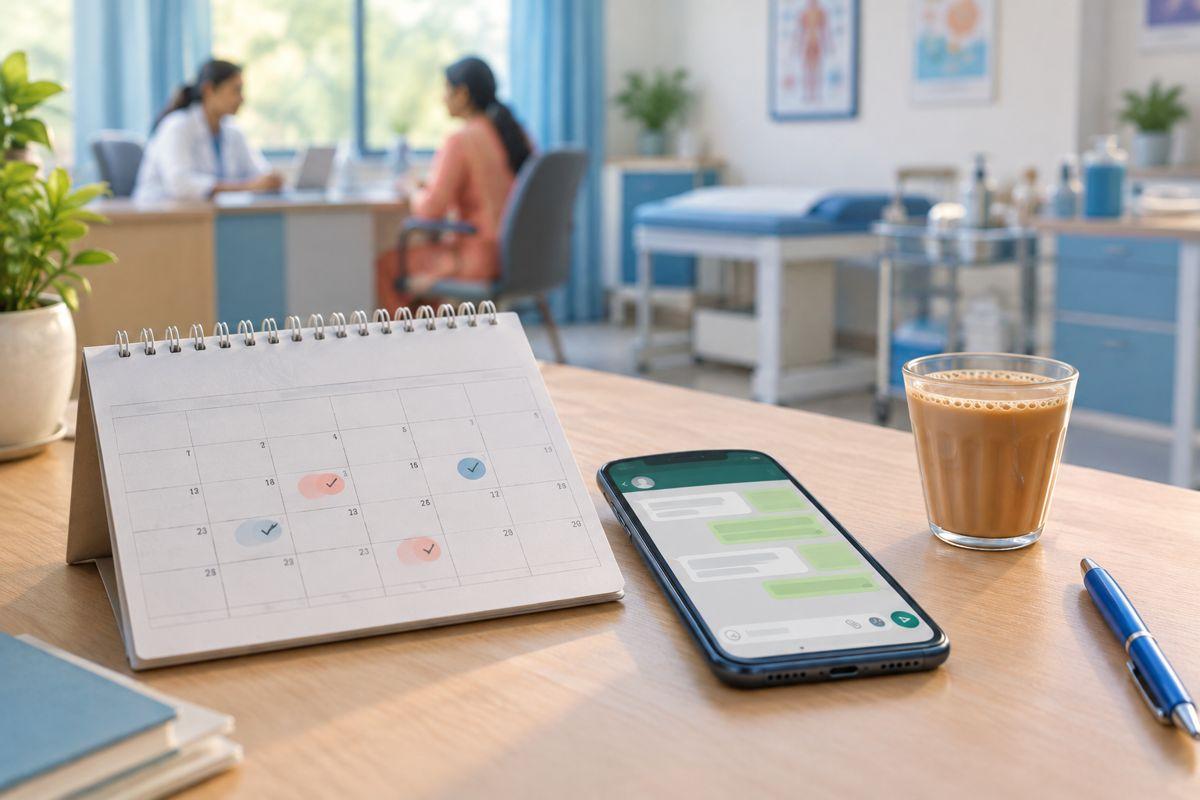
Most no-shows are not patients who decided against the visit. They forgot, or something came up and cancelling felt like more effort than not turning up. A reminder the day before, and a way to reschedule with one reply, removes both reasons.
The appointment was booked a week or more ahead and nothing mentioned it since. Or the patient knew they could not make it but calling the clinic to cancel meant waiting on hold during work hours.
Neither is a patient problem. Both are gaps in how the clinic stays in touch between the booking and the visit.
02
The reminder that works
A message or call the day before, with the time, the doctor and the address, is the single most effective step. Earlier reminders help for appointments booked far ahead.
The reminder should make rescheduling easy. A patient who can reply to move the slot is a rebooking, not a no-show, and the freed slot can go to someone else.
03
Fill the gaps that do appear
Keep a short list of patients who wanted an earlier slot. When a cancellation comes in, offer it to them.
Track who misses repeatedly. A direct call after a missed visit usually rebooks the patient and tells you why they missed it.
Questionsdoctorsask,answered
When should a clinic send appointment reminders?+
The day before is the one that matters most. For appointments booked weeks ahead, add one a few days before as well. On the day itself, a short message helps only for early-morning slots.
Should reminders be calls or WhatsApp messages?+
WhatsApp suits most patients because they can reply when convenient. A call works better for older patients and for procedures that need preparation explained.